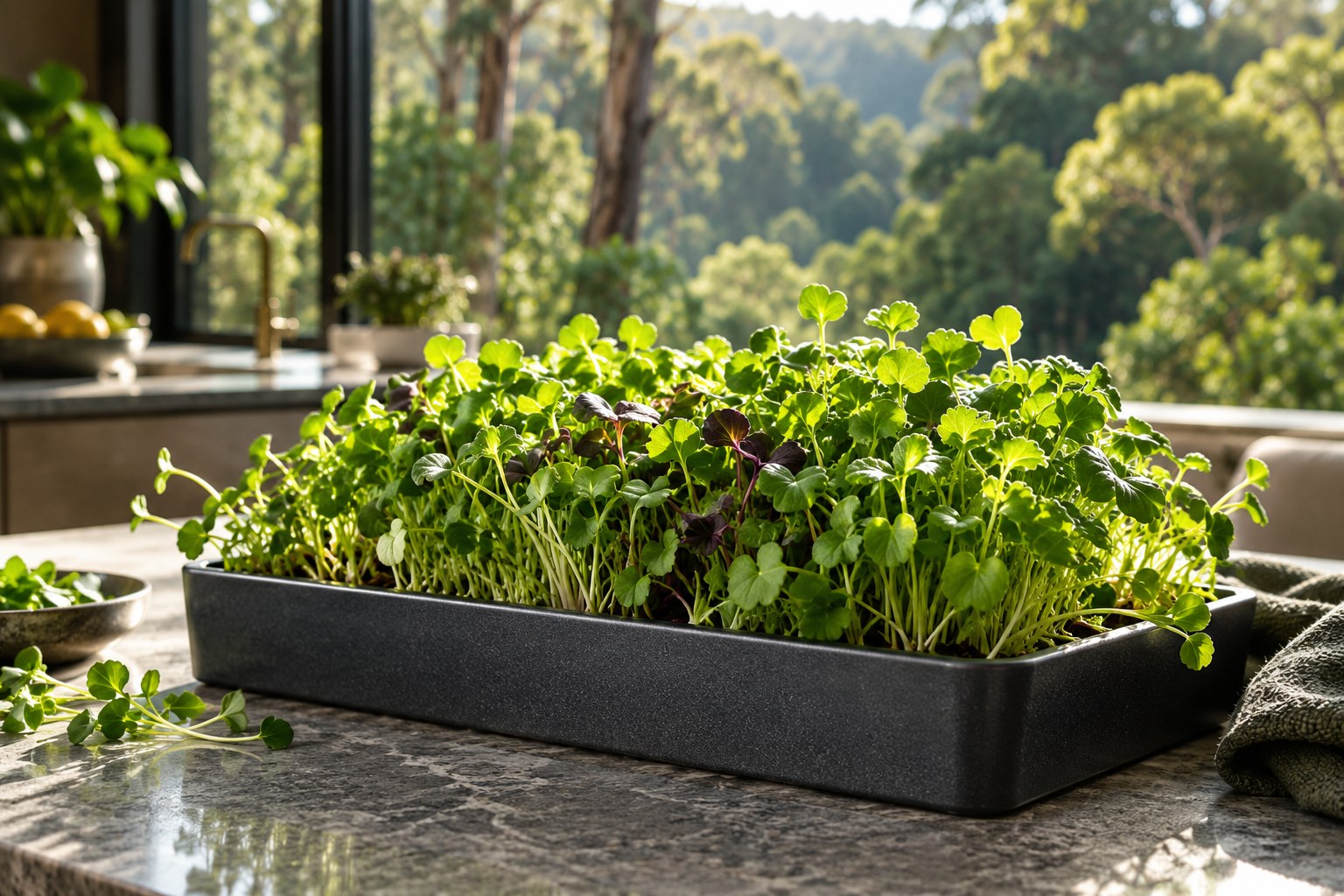
A bright-looking kitchen and a well-lit growing tray are not always the same thing. Cupboards, neighbouring buildings, window coverings and the time of year can all change the light reaching your seedlings. Assess the exact spot where the tray will sit.
Microgreens need suitable light as they grow. A window can work in some homes; an appropriate grow light can help where daylight is insufficient. Germination and growing-stage requirements vary by seed.
Check the spot across the day
Before you buy extra equipment, observe your proposed position in the morning, around midday and later in the afternoon. Look for direct sun reaching the tray, long periods of shade and heat building up near the glass. The brightest shelf at breakfast may be shaded for the rest of the day.
In Australia, avoid treating “put it in the sun” as a universal instruction. A position that works during a cool week may become too hot in summer. Follow the seed guidance and watch the crop as conditions change.
Germination is a separate stage
Some growing methods use a covered period at the start. That does not mean a crop should stay in a dark cupboard throughout its life. Check when the seed supplier says to remove a cover and introduce light.
Add that stage to your tray label or diary. It is easier to follow a clear instruction than to remember a video you watched several days before sowing.
When a grow light may help
University of Maryland Extension describes window light as sufficient in some situations and grow lights as an option for consistent indoor growing. Lamp distance and duration depend on the equipment and the crop; copying another person’s settings without checking the light model can be misleading.
Before purchasing, ask for instructions that cover your tray size. Check the fitting, timer, operating cost and electrical suitability for the location. Keep electrical connections protected from watering spills and follow the manufacturer’s installation directions.
- Measure the full tray area, not just the shelf width.
- Check that the lamp can be mounted at its recommended distance.
- Allow room to lift and water the tray without moving live electrical equipment.
Look for patterns, then change one thing
A tray leaning towards a window can suggest uneven light, but appearance alone does not diagnose every problem. Review water, sowing density and seed instructions as well. Do not automatically add more water to a weak-looking crop.
If you move the next tray, record the new location and compare its development with your previous notes. A consistent setup makes it easier to decide whether a light is a useful purchase or whether a better position is enough.