White fuzz on a tray is a reason to pause and look carefully. It is not automatically mould, but a quick glance cannot establish that a crop is safe to eat. Keep a questionable tray away from your harvest area while you work out the next step.
Root hairs can be normal; mould is not. Do not taste a questionable crop or rely on a misting test to prove safety. If you suspect spoilage, discard the crop, clean the equipment and review the growing conditions.
Is the white fuzz root hair or mould?
Purdue Extension distinguishes normal root hairs from mould. Fine growth associated with roots may be part of the plant. Growth spreading across the tray, deteriorating seedlings or an unusual smell deserve caution. A photograph or a spray of water cannot rule out harmful contamination.
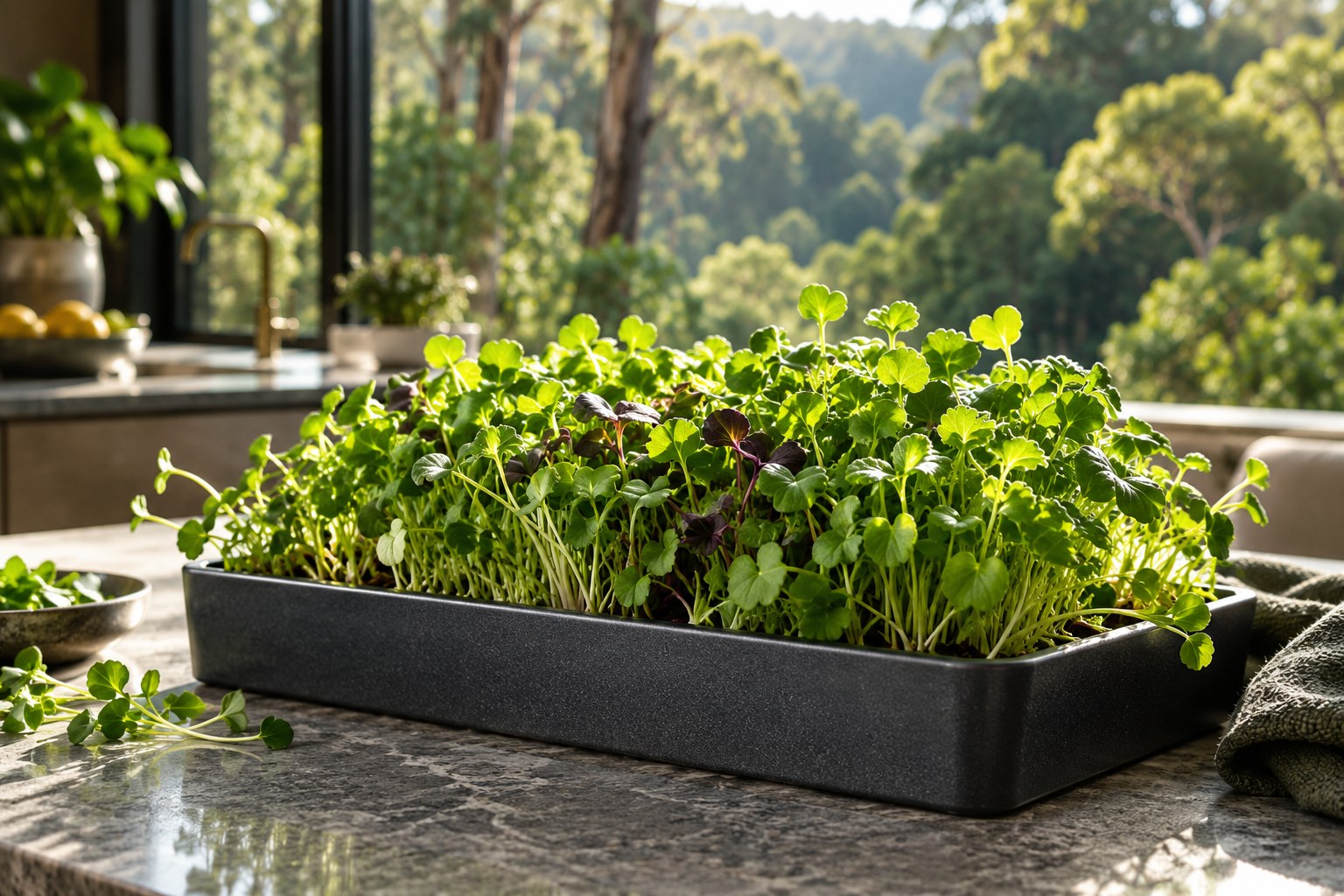
This article’s leaf photograph is not a diagnostic reference. If the cause is unclear, send the seed supplier a clear photo of the tray, its label and the affected area. Do not harvest while waiting for advice.
What to do with a suspect crop
Do not try to rescue a spoiled crop by cutting around a patch or applying household cleaning products to food. Discard the affected crop and medium. Clean the tray and tools before using them again, following their care instructions.
A disappointing tray is useful information, but it is not worth eating to avoid wasting seed. Take notes before disposal so the next attempt can address the likely cause.
Review the setup before sowing again
- Water: was the medium constantly saturated or water pooling where it should drain?
- Density: did you use the packet’s rate, or add extra seed to fill gaps?
- Airflow: was the tray left covered too long or placed in a still, enclosed corner?
- Equipment: were the tray, tools and work surface cleaned before sowing?
- Inputs: were the seed and medium intended for this use and stored as directed?
Make the next attempt easier to understand
Keep the next crop small and follow the supplier’s method closely. Label it with the seed batch, amount sown and date. Take a daily photo and note watering. These details make a supplier conversation much more useful than “my tray went wrong”.
Do not assume a stronger fan or less water alone solves every failure. The aim is appropriate moisture and airflow for the crop, not a bone-dry mat or seedlings buffeted all day. If the same problem repeats, stop using the suspect batch or setup until you have specific guidance.
Does a clean-looking tray prove it is safe?
No. Appearance and smell do not detect every food-safety hazard. Good handling matters even when a crop looks healthy: clean hands and tools, suitable water and inputs, and separation from raw meat and other contamination sources.
For normal harvests, use the separate harvesting and storage guide. It explains the transition from growing tray to food on the plate.