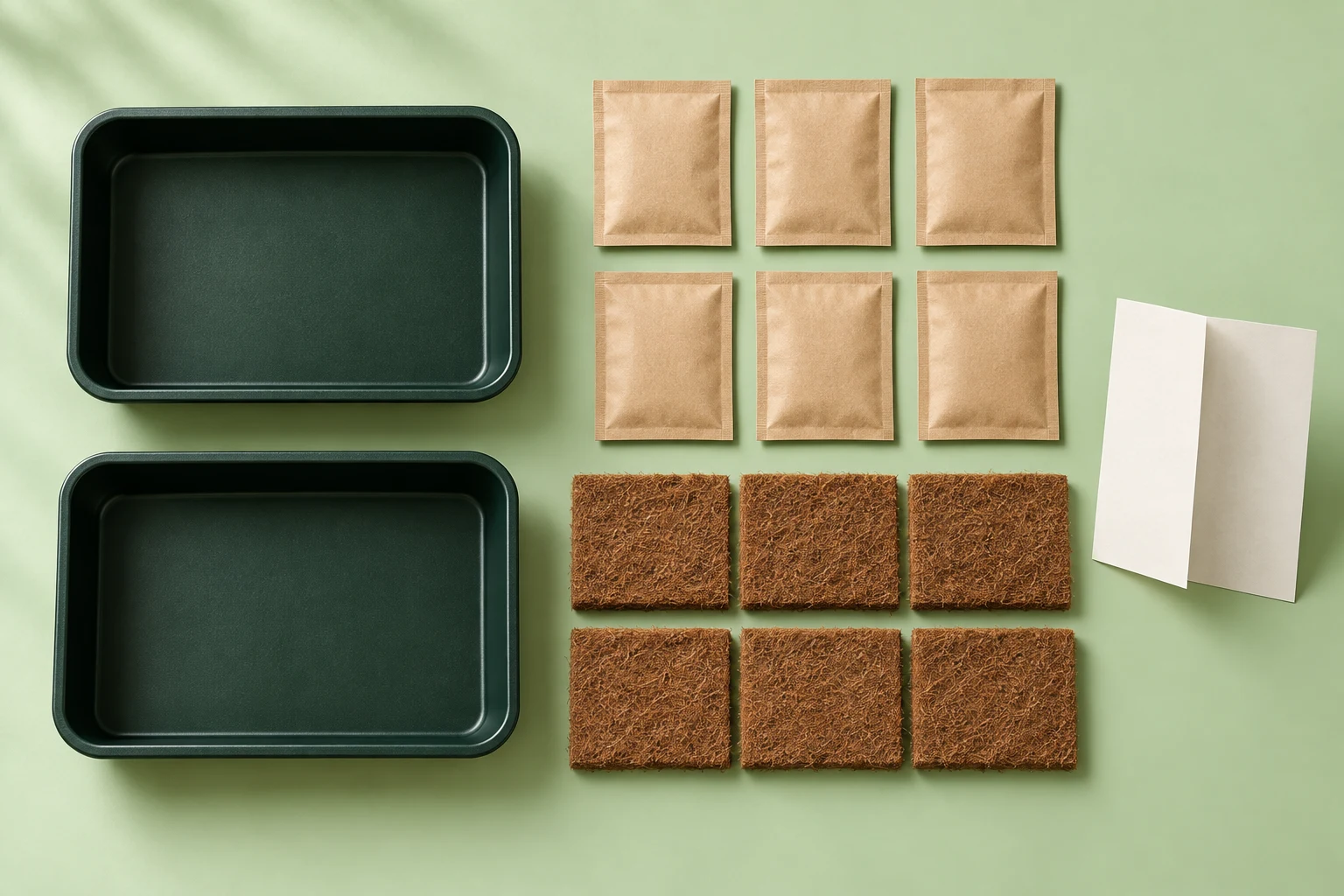
A regular harvest starts with knowing how much you use. Sowing everything on Sunday can give you a lot of greens at once and none later. A simple crop record helps you space the next trays more usefully.
Track actual sowing-to-harvest time and how long you take to eat a crop. Use those observations to stagger trays. Weekly sowing is an option to test, not a promise of weekly harvests in every home.
Learn from one complete crop
For the first tray, note the variety, sowing date, harvest date and the meals it supplied. Record the amount you did not use as well. Waste is useful planning information: it can mean the next sowing should be smaller rather than more frequent.
Keep the record somewhere convenient. A note on your phone is enough. You are looking for a household pattern, not running a research station.
Set a trial sowing interval
Suppose a variety reaches your preferred harvest stage in about two weeks and your household uses a tray over several meals. You could trial a second sowing a week after the first. That is a planning example, not a verified yield or growth schedule for a microgreen kit.
If you run out before the next tray is ready, shorten the interval or review tray size. If harvested greens are repeatedly left over, lengthen the interval or sow less. Adjust based on actual results rather than adding trays automatically.
Give every stage somewhere to go
Map where the next tray will sit while the current crop is growing. Include the space needed for germination if your method uses a separate stage, plus room for cleaning and drying equipment.
A two-tray routine works best when both trays have a defined purpose. If one tray is always unavailable because it still needs cleaning, build that reset into the schedule before increasing seed purchases.
A small log with useful answers
| Record | Why it helps |
|---|---|
| Variety and seed batch | Separates one crop’s behaviour from another |
| Date and amount sown | Makes the next sowing comparable |
| Location and changes | Helps explain a different result |
| Harvest date | Gives your actual timing |
| Meals and leftovers | Shows whether the quantity fits |
| Next sowing date | Turns the observation into a plan |
Order refills around your routine
Count sowings rather than calendar months. Once you know how much seed and medium you use per tray, work out what a refill pack represents for you. Allow for delivery without buying more than you can store as directed.
Choose a one-off refill while you are still experimenting. A regular delivery can be considered later if its quantity and schedule match the pattern you have established. You should not need to grow extra trays simply to keep up with deliveries.
Leave room for a pause
Travel, a busy week or a failed crop will interrupt the routine sometimes. Keep your plan easy to restart: retain the instructions, label remaining seed and clean the equipment before putting it away.
A small routine you return to is more valuable than an ambitious schedule you cannot maintain. Let your meals set the pace.