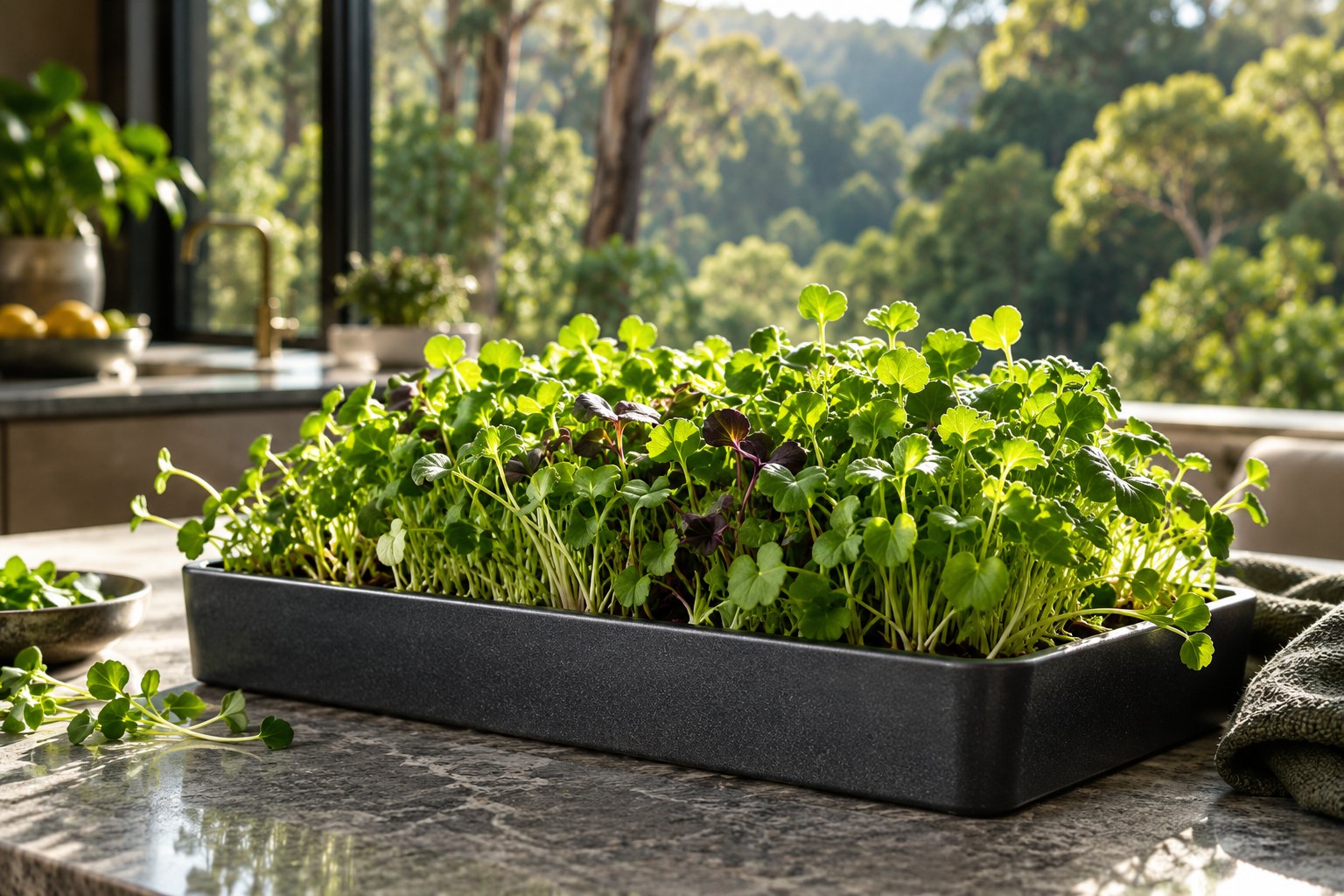
Follow the variety’s temperature and light guidance, and observe how your actual growing spot changes. Indoor growing can extend your options, but it does not remove heat, moisture or light constraints.
Check temperature, light and moisture at the tray as the seasons change. Direct sun through glass, air conditioning and shorter winter days can all affect an indoor crop.
Check conditions at the tray
Place a suitable room thermometer near the growing area and compare morning and afternoon readings. Note direct sun, air-conditioning use and whether moisture is lingering beneath a cover. A weather app describes outdoor conditions over a wider area, not the microclimate beside your glass.
Keep a simple seasonal note with each sowing: location, approximate temperature pattern and anything different about light or watering. This lets you compare your own winter crop with your own summer crop.
Changes to make in heat, cold or humidity
| Condition | What to watch | Practical response |
|---|---|---|
| Hot direct sun | Rapid drying or heat stress near glass | Choose a suitable less-exposed position |
| Cool room | Slower emergence or growth | Use crop-specific temperature guidance; allow appropriate time |
| Humid still air | Persistent surface moisture | Review spacing, covers and ventilation |
| Shorter or obstructed daylight | Leaning or stretched growth | Assess a brighter position or suitable grow light |
| Strong air conditioning | Uneven drying | Move out of the direct airflow and monitor moisture |
Adjust one condition at a time
If a previously reliable spot changes, begin by observing it again. Do not immediately double watering or seed weight. Move a trial tray, adjust a light within its directions or reduce an overcrowded sowing, then record the result.
A heat mat or fan adds another variable and an electrical item near water. Use equipment intended for the purpose and follow its instructions. General advice to “add heat” is not useful if the medium is already warm.
Growing during heatwaves or time away
Sow fewer trays before a period when you cannot maintain the required conditions. During time away, arrange appropriate care or pause growing. A reserve of dry seed is easier to manage than a crop nobody can inspect.
Use your own crop records to decide when seasonal changes are needed. Broad labels such as tropical, subtropical or temperate can provide context, but they should not replace the observations from the actual shelf.