Composition studies show that nutrient levels vary between microgreen species and growing conditions. They do not establish that every variety is superior to mature vegetables or that eating microgreens treats a medical condition.
Nutrient levels differ between microgreen varieties and growing conditions. To understand a nutrition claim, check which crop was measured, which nutrient was tested and how much you would eat.
An explanation of published research, not a nutritional analysis of our products or individual medical advice.
What researchers measured
USDA Agricultural Research Service reporting on a study of 25 microgreen varieties describes substantial differences in measured vitamins and carotenoids. The comparisons concern specific nutrients in fresh plant samples. They are not a test of our kits, and they do not give one reliable multiplier for all microgreens.
When you see “more nutritious”, ask: more of which nutrient, compared with which food, at what harvest stage and on what weight basis? Without those details, the comparison is too broad to guide a meal.
Calculate nutrients for your portion size
A useful calculation is nutrient per 100 g multiplied by portion weight in grams, divided by 100. If a report gives a value of 50 units per 100 g, a 10 g portion contains 5 of those units. This is an arithmetic example, not a measured nutrient value for any microgreen.
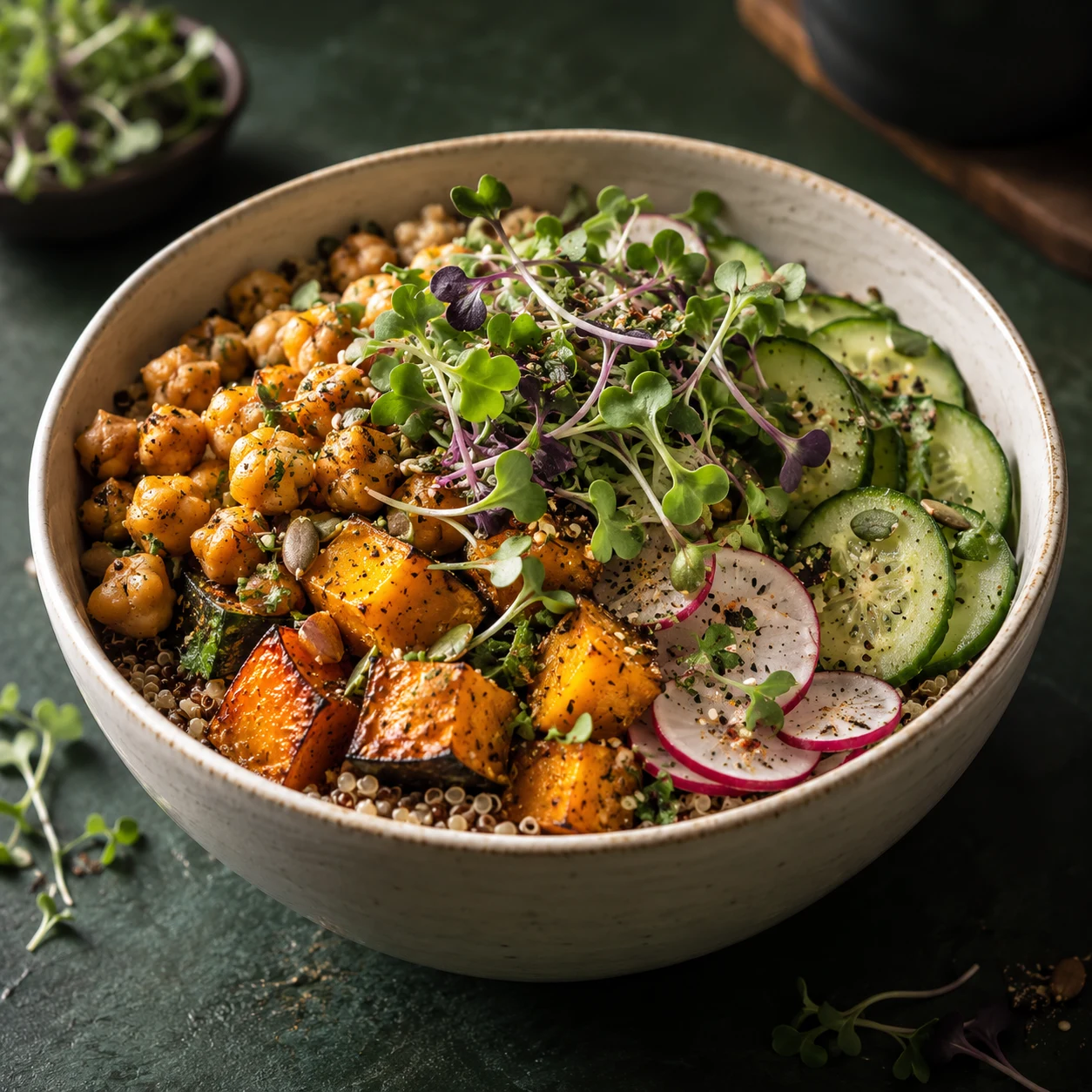
A garnish and a full vegetable serving have different jobs on a plate. Enjoying a handful of microgreens need not mean removing other vegetables, legumes or fruit from your meals.
Nutrient content and health outcomes
| What you read | What it can establish | What to ask next |
|---|---|---|
| Nutrient analysis | What was measured in those samples | Does it match my crop and portion? |
| Laboratory experiment | What happened under the test conditions | Was it studied in people eating normal meals? |
| Human study | An outcome in the studied group | How large was the study and does it apply to me? |
| Product marketing | A claim that needs support | Where is the relevant evidence? |
Using microgreens in meals
Choose varieties for flavour and how you will use them. Add a mild crop to a sandwich or a peppery one to a bowl, while keeping a varied pattern of eating. Microgreens should not be used as a treatment for a medical condition.
If pregnancy, immune suppression, a food allergy or a prescribed diet affects what you can eat, discuss raw microgreens with an appropriate health professional. Do not change medication or rely on a particular crop to correct a deficiency.