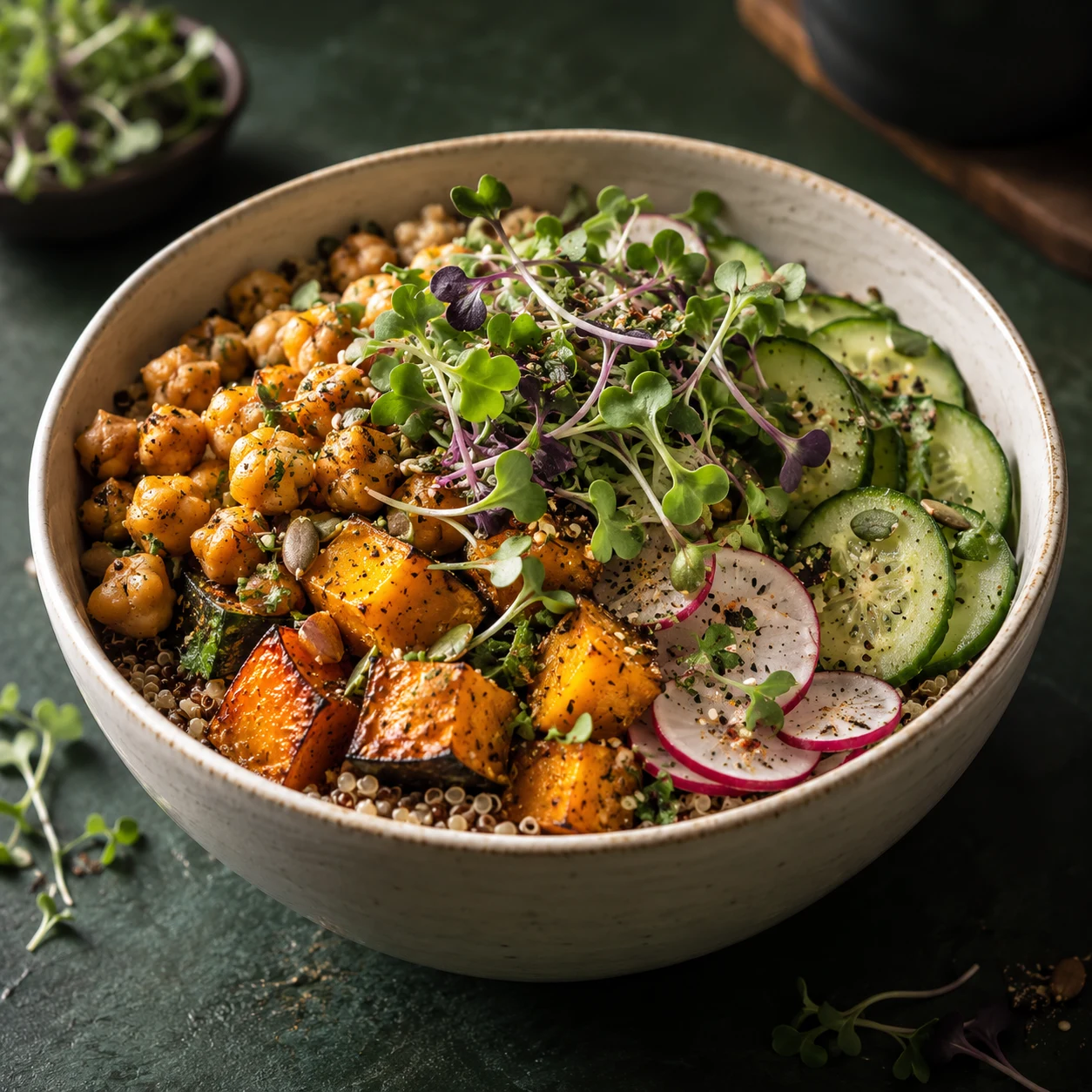
Trial a few identified crops with the actual dish, compare portion sizes and record flavour, texture, service effort and cost. Keep the strongest pairing rather than the largest garnish.
Choose microgreens for how they taste with the dish and how they hold up during service. Test a measured portion, record its cost and check whether diners can eat it easily.
Choose crops to taste
| Crop or group | Direction to explore | Trial question |
|---|---|---|
| Radish or mustard | Peppery contrast | Does a small amount balance a rich element? |
| Broccoli | A milder brassica note | Does it suit the dish without dominating? |
| Pea shoots | Fresh pea character and more substantial stems | Is the texture right at the chosen stage? |
| Basil or coriander | Recognisable herb character | Is the young crop preferable to the existing herb? |
| Beetroot | Colour and an earthy direction | Does it improve the whole bite? |
Taste each crop with the complete dish
Prepare a control plate with the existing garnish or no garnish. Compare it with measured amounts of the candidate crops on otherwise identical dishes. Use sound ingredients handled under the kitchen’s food-safety procedures.
Ask the tasting group to describe the effect in plain language. “Too strong after the sauce” is more useful than “premium”. Note if the garnish is awkward to eat or mostly left on the plate.
Test plating during service
Have the person who will plate the dish apply the garnish at service pace. Time the handling, check portion consistency and see whether the same presentation works on the actual plateware.
Record the result after the realistic interval between plating and eating. A crop that looks good for the photograph may not suit a hot sauce, a takeaway lid or a long event service.
Write the garnish instructions
- Crop identity and approved alternative.
- Portion in grams or another checked, repeatable measure.
- Preparation and handling procedure.
- Where on the dish it belongs and when it is added.
- Rejection criteria and who can approve a substitution.
- Cost per served portion using actual usable yield.
Describe what you tested
Record which crops and portions you tested, the dishes used and the result during service. Base menu descriptions on those observations. A tasting does not establish nutrition benefits or increased sales.